What makes a pair useful for the drill?
Comparable size helps two people move through a technique together. Skill matters too, but it does not mean partners always need the same belt or experience. The point is to give both people a useful way to practice what the class is learning.
Partners at a similar level
Two people learning the same movement can repeat it together and notice where each gets stuck. They may have similar questions about the demonstration.
A partner with more experience
Sometimes an experienced student can drill with a newer student and help them follow the movement and the instructor's explanation. The experienced partner is there to learn too. Phantom's aim is a room where people help one another improve.
What could that look like in class?
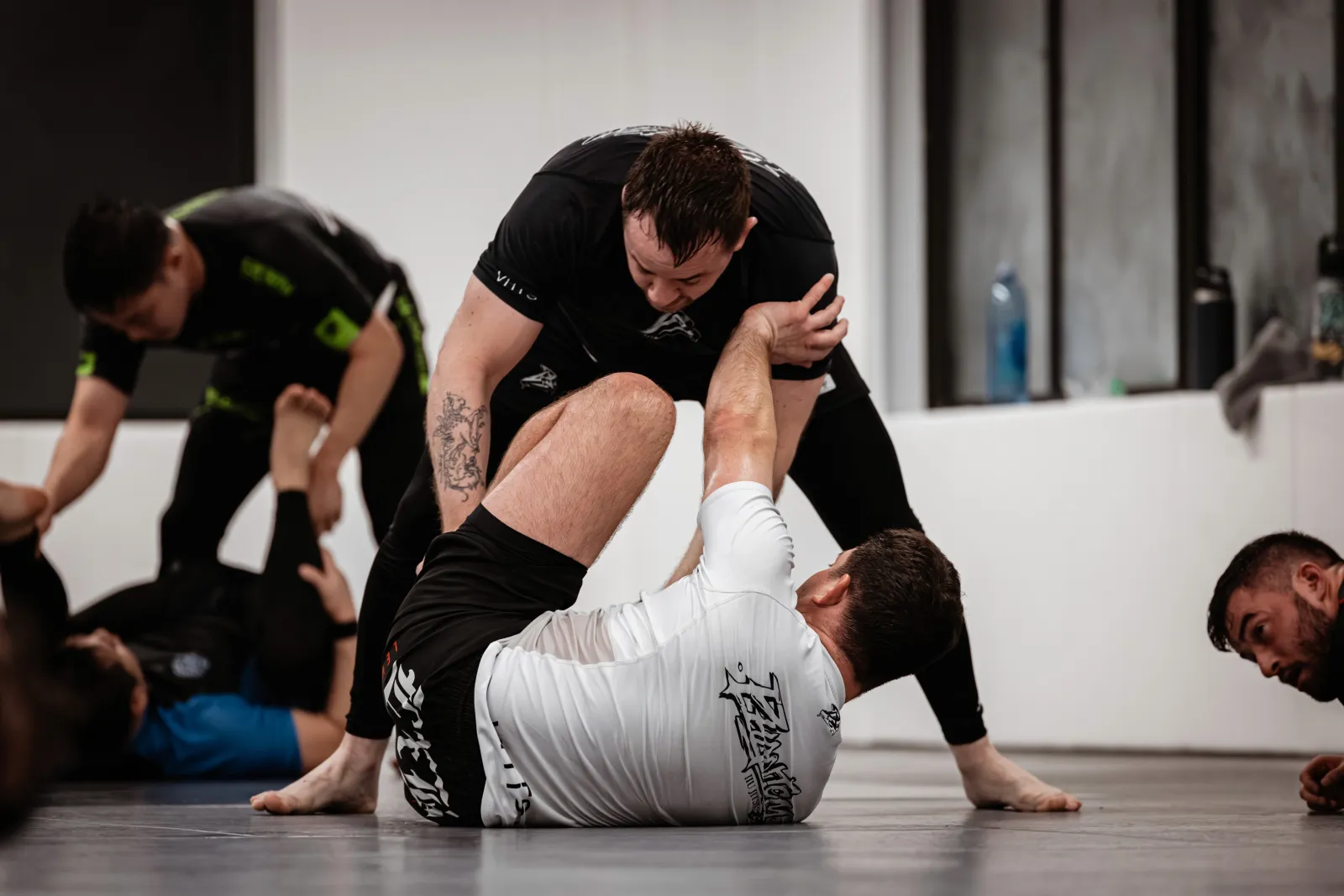
Imagine a newcomer and two available partners who are close to the newcomer's size. One is also learning the movement; the other has practiced it before and can help the newcomer find the step they missed. Either pairing could be useful, depending on the exercise and the people present. This is an illustration, not an account of a particular Phantom class or a promise about who will be available.
What should you tell someone before you drill?
Name the part of the movement you want to learn: “I understand where we start, but I lose the position at this step. Could we repeat that part?” If your size difference or experience gap makes that step hard to practice, ask the instructor which partner or adjustment would fit this exercise. You do not need to choose a partner by belt rank alone.
Choose the class that fits your experience
Phantom's Adult Jiu Jitsu Program explains Fundamentals, All Levels and Advanced. The weekly schedule shows current Gi and No-Gi classes. If you are new or unsure where to begin, request a trial and share your experience when the academy follows up.