
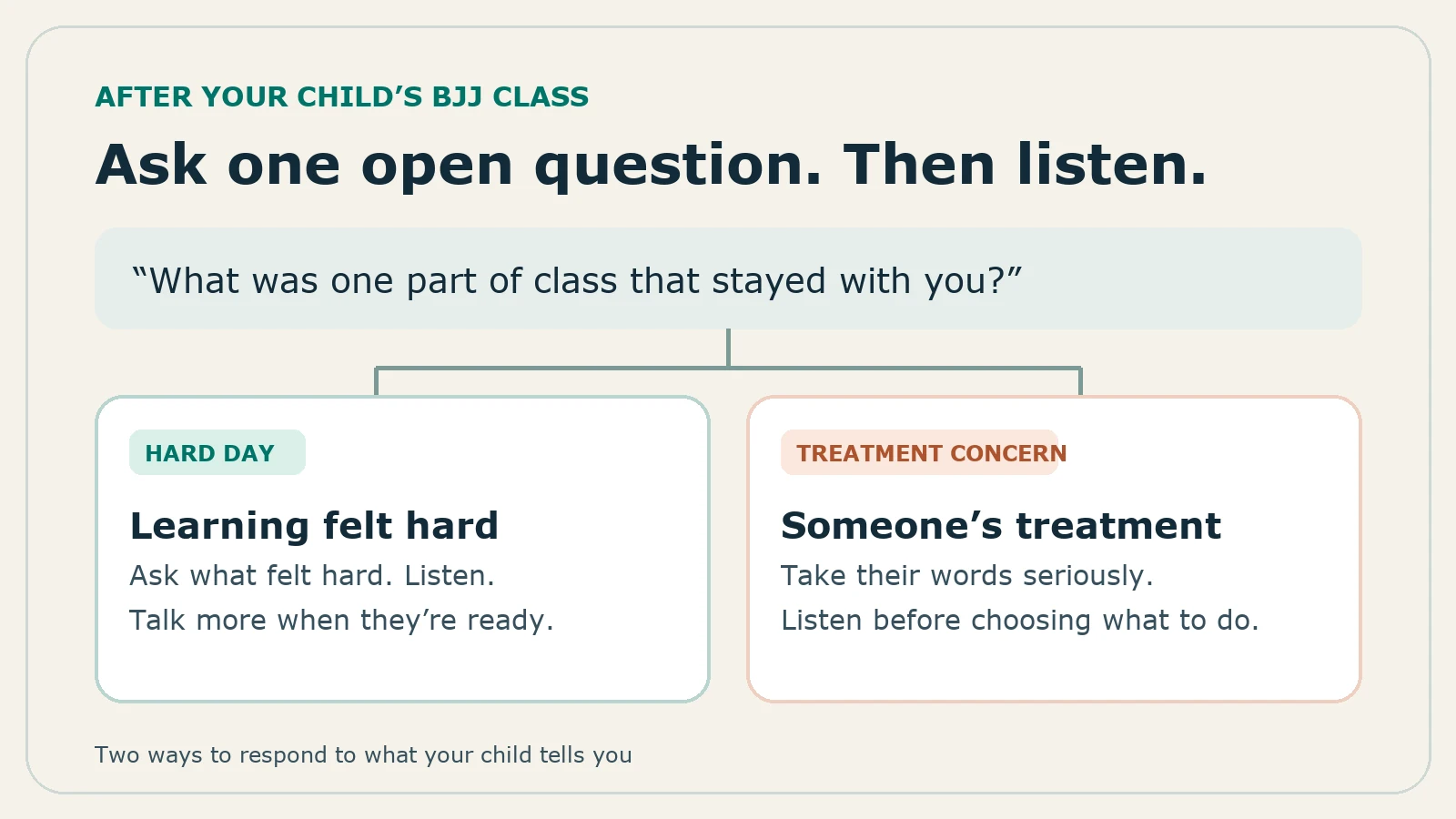
What should you ask your child after BJJ class?
Try “What was one part of class that stayed with you?” Then let your child answer in their own words. If they don't want to talk on the way home, try later. The Positive Coaching Alliance advises parents to listen, ask open questions, and choose a time when their child is comfortable talking.
What if BJJ class was simply hard today?
Ask what felt hard, then listen for what your child wants to do next. For example, they might say they couldn't remember a move and felt frustrated. You can ask, “Do you want to tell me more, or would you rather take a break?” A tough learning day doesn't, by itself, tell you how someone treated your child. The U.S. Center for SafeSport separates trouble with performance or interest from concerns about a coach's or teammate's treatment.
What if your child describes how someone treated them?
Take their words seriously and let them finish. For a hypothetical example, your child might say, “A teammate kept calling me names after I asked them to stop.” Ask what happened without suggesting an answer. You don't need to decide what it means before you've heard them. The U.S. Center for SafeSport's listening examples advise adults to listen and take a child's concern seriously.
How do you choose the next step after your child's BJJ class?
Use what your child told you to choose a next step. You can come back to the conversation when they're ready to say more.
If learning felt hard
Ask what they want to try next time, or give them room to rest and talk later. A hard day can stay a hard day.
If they describe a treatment concern
Listen and take the concern seriously. Ask what support they need. Then seek help for the concern they described; as their parent, decide whom to ask and what to do next.
Where can you see Phantom's current kids program?
Phantom Jiu Jitsu Academy's Kids BJJ program in Herndon has age groups 6–9 and 10–13. Check the current schedule for class times.